


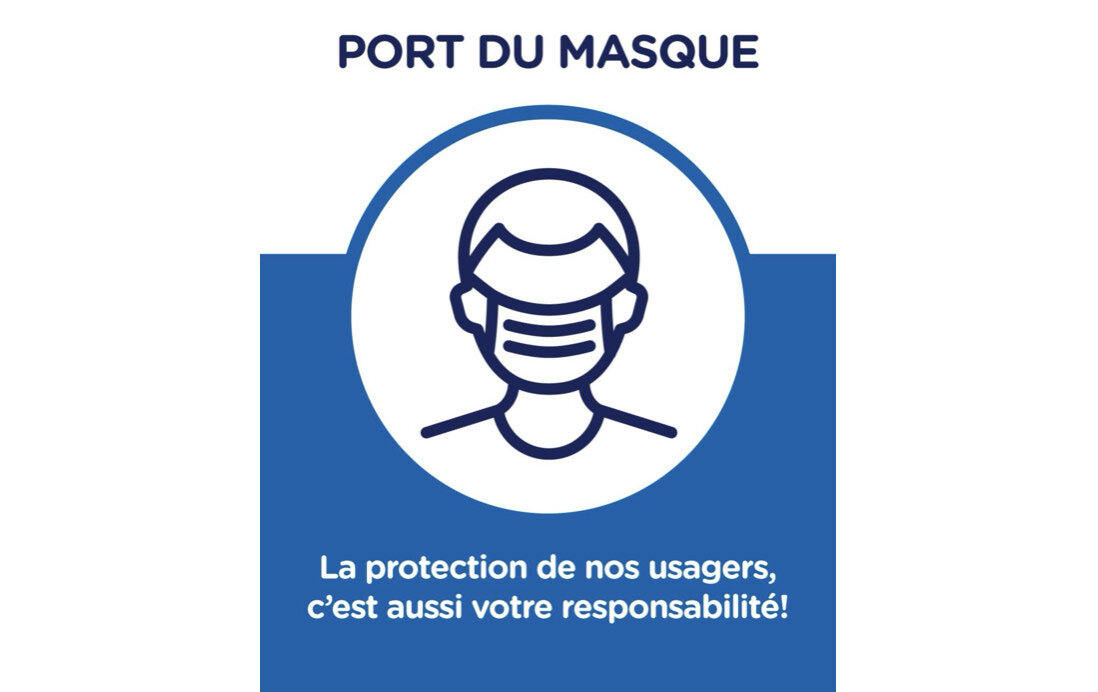
Wearing a mask (December 9, 2025). Photo: Courtesy of the CISSS de l’Outaouais
Bill 2 and the return of mandatory masks in health-care facilities
Mélissa Gélinas
In the midst of the flu season, when emergency rooms are constantly overwhelmed due to significant outbreaks of respiratory viruses, particularly Influenza A, the Integrated Health and Social Services Centre (CISSS) of the Outaouais announced on December 9 that wearing medical masks at all times will be mandatory in all health-care facilities in the region.
This measure aims to alleviate the strain on hospitals, slow the spread of viruses, and protect patients, health-care workers, and vulnerable individuals. Therefore, masks are required upon entry to:
• Hospitals (including outpatient services)
• Pierre-Janet Psychiatric Hospital (including units 5 and 6 of the Juvenile Pavilion)
• Physical Rehabilitation Centre (La RessourSe)
• Long-Term Care Centres (CHSLDs)
• Seniors' Residences and Alternative Living Facilities
This new measure reflects the severity of the situation in the Outaouais health-care network. Indeed, according to the Health Index, the stretcher occupancy rate in the hospitals of Hull, Gatineau, and Papineau has exceeded 150%, amidst a primary care physician crisis triggered by Bill 2.
A glimmer of hope
This measure has, however, been suspended until February 28, 2026, to allow for necessary amendments. An agreement in principle between general practitioners and the Quebec government is also anticipated. However, the terms and details of the agreement have not yet been released. In this regard, Quebec Premier François Legault emphasizes that this agreement will be beneficial for everyone. “This will be the most significant change in family physician compensation since the implementation of the health insurance plan,” he stated. To date, no agreement has been reached with medical specialists.
Irreversible Consequences
Although this represents a partial victory for the Quebec Federation of Family Physicians, the damage to the Outaouais region has, unfortunately, already been done. Indeed, since the announcement of this legislation, of the 286 primary care physicians, 41 have confirmed their departure, while another 54 are in the process of leaving the region. The result: nearly 37,000 patients will find themselves without a family doctor by the first few months of 2026. This irreversible situation will have a host of consequences for the population. According to Dr. Jade Trudel-Sabourin of the Wakefield Family Medicine Group, it is almost impossible for these doctors to return once their employment contract is signed. “I am eager to see how this agreement will be able to rebuild our health-care system given the numerous departures of our colleagues,” she says.