


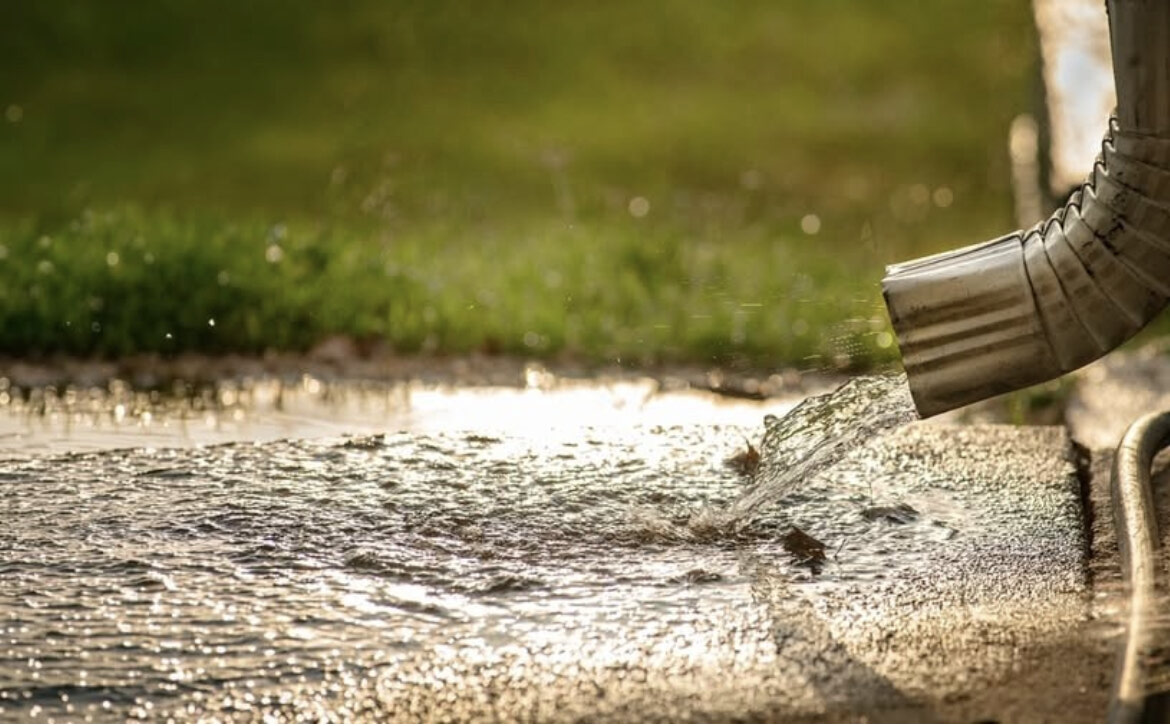
Gatineau's new EAULOGIK program will reimburse up to half the cost of rain gardens, swales and other water-absorbing projects on private property, to a maximum of $30,000 each, as the city looks to ease the pressure that heavy rainfall episodes put on its sewers and rivers. Photo: Courtesy of the City of Gatineau
Catching rain where it falls: Gatineau’s new EAULOGIK program
Tashi Farmilo
The EAULOGIK program, launched by the City of Gatineau on June 10, will reimburse residents, businesses and non-profit organizations for up to half the cost of capturing rain where it falls on their own property, to a maximum of $30,000 per project. The goal of this program is to ease the pressure on the city's sewers and rivers during heavy rainfall episodes. Priority goes to the older, low-lying districts that flood first when the pipes can no longer keep up.
The timing is not incidental. This spring, the Ottawa River almost reached its 2023 level, cresting only centimetres lower through the Gatineau stretch. This tipped the city into major flooding for the fourth time in a decade, following events in 2017, 2019 and 2023.
The program is built for the slower trouble behind the dramatic events: the loss of the land's ability to soak up water. Marshes and undeveloped ground once acted as the region's sponge, absorbing rain and snowmelt and releasing it over days. However, subdivisions, roads and parking lots have paved over much of that sponge, meaning that water that would once linger now races across hard surfaces into the sewers all at once. This causes overflows, resulting in flooding in basements and the flushing of pollutants into rivers. A warming climate is exacerbating the problem by making cloudbursts that overwhelm the system more frequent and more intense.
That is the gap EAULOGIK is meant to narrow. A rain garden, a bioretention swale or a torn-up stretch of driveway is, in effect, a small patch of wetland rebuilt on private land. None counts for much alone, but the city is wagering that thousands of them across thousands of lots can restore some of the region’s lost storage capacity.
The city has mapped the areas where it most wants the work to be carried out, sector by sector. In Aylmer, the priority zones are concentrated in the historic village core, along the long-settled streets around Principale Street and down toward the Ottawa River, where older combined sewers carry both stormwater and sewage in a single pipe, resulting in faster overflows.
Qualifying work must sit on non-municipal, uncontaminated land, clear a scoring threshold and be completed by December 31, 2027. Applications opened on June 9 and will be accepted on a rolling basis until the end of 2027 or until the funding runs out. Applications can be submitted at gatineau.ca/eaulogik or at municipal service centres. The program has a $250,000 envelope, $150,000 of which comes from a Quebec stormwater fund. This is a modest sum against a problem the province has confronted at far greater cost elsewhere, from flood-adaptation studies to buyout offers for homeowners willing to leave the floodplain for good.
City officials cast the effort as both immediate and long-range. “The payoff reaches well past stormwater,” said Rachel Deslauriers, the municipal councillor for Mitigomijokan and chair of the city's Environment and Climate Change Committee, pointing to cleaner water, healthier habitat and a city better braced for what the climate is becoming.
Suzanne Tremblay, the member of the National Assembly for Hull, put it more plainly. “When we hold, soak up or slow the rain right where it lands, we cut the odds of overloaded sewers, backups and runoff into our rivers, and we make our neighbourhoods readier for the climate we already live in.”