


Edey's Graveyard (1830-1966)
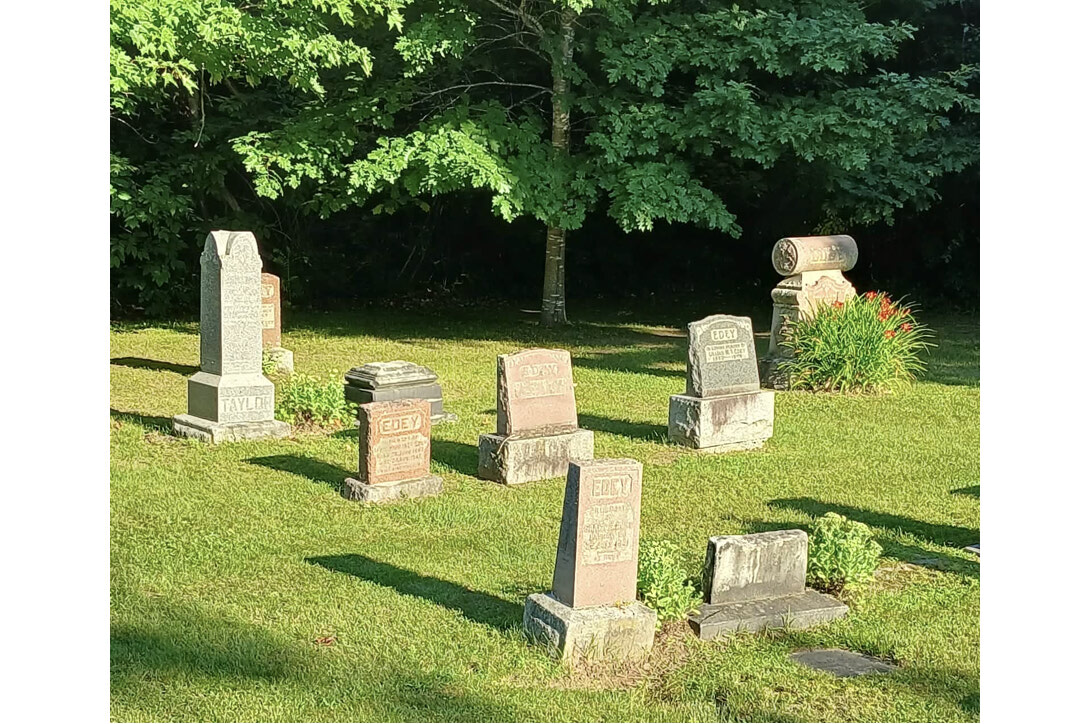
Edey's Graveyard is a small family burial ground consecrated in 1830 on land donated by Moses Edey. It is surrounded by a wrought-iron fence and shaded by lilac groves and other shrubs, giving the area an atmosphere of tranquility. It is registered as Edey's Cemetery; however, it is known locally as Edey's Graveyard.
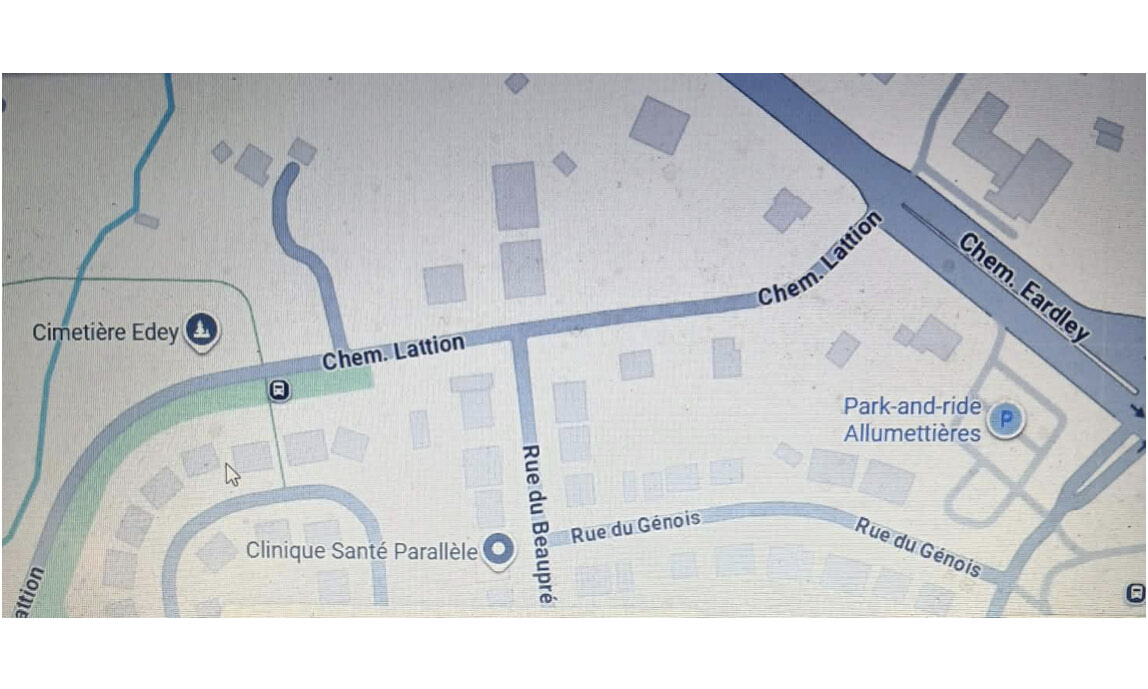
The graveyard is located on Lattion Street next to the Delorme-Edey House on the western edge of the town of Aylmer. The headstones are distributed irregularly on relatively flat ground, elevated 100 feet above Lake Deschenes. (In 1830, Aylmer wasn't yet incorporated as a village. That only happened in 1831, and so Edey's Graveyard was located on the outskirts of Symmes Landing in the Township of Hull.)
The property is designated a heritage site. It is of heritage interest for its historical value, based on its association with the Edey family, who contributed significantly to the settlement and development of Aylmer. Many of the headstones are over a hundred years old.
The Edey family used this private burial site for over 100 years. Moses Edey (1783-1857), hailed from Randolph, Vermont and was one of the Aylmer pioneers who settled on the Eardley Road in 1805. He married Elizabeth Chamberlain. His brother Samual came to Aylmer in 1806 and married Abigail Wright, Philemon Wright's niece.
A devout Methodist, Moses participated in the construction of the Hull Township Methodist Chapel in 1827 (now the Aylmer Heritage Association building), known by those who grew up in Aylmer as the Farley house. This chapel is the oldest still standing west of Montreal.
In 1847 Moses Edey was elected to Aylmer's first municipal council. His son-in-law, James Finlayson Taylor, Aylmer's first secretary-treasurer, was another influential member of this notable family and is buried in the graveyard. The oldest headstone still standing in Edey's Graveyard is that of Moses Edey's daughter Emily, who died at the age of 23 on December 12, 1848.
There may be older graves but, back in the day, it was common practice to erect a wooden cross as a grave marker. These crosses would eventually decay, and the grave location was lost. There are still about 30 headstones in the graveyard. The last burial, that of Lillian Margaret Taylor Edey, was in 1966.
Edey's Graveyard is a testament to the funerary practices of the first pioneer settlers in our area. They interred their loved ones on their own land, generally on an elevated spot overlooking the surrounding area. Private family cemeteries are found in several regions of Quebec, particularly in the southern parts of the province. This practice became illegal in the 20th century, except for Edey's Graveyard. Family members continued to be buried there until 1966. The Edey Graveyard is a perfect example of a private cemetery.
Growing up in Aylmer, Edey's Graveyard was always referred to as a haunted spot and there are many tales of strange phenomena occurring near this property. When I was 15 years old, I was riding my bicycle by the graveyard when the chain popped off and, since I had coaster brakes, I was unable to stop and ended up in the ditch. After that, I always considered it a spooky place.
For more local history, join "A Walk Down Memory Lane Aylmer" on Facebook.
Sources: City of Gatineau, 2006, Anson A. Gard
Photo credit: Charlie Trinque