


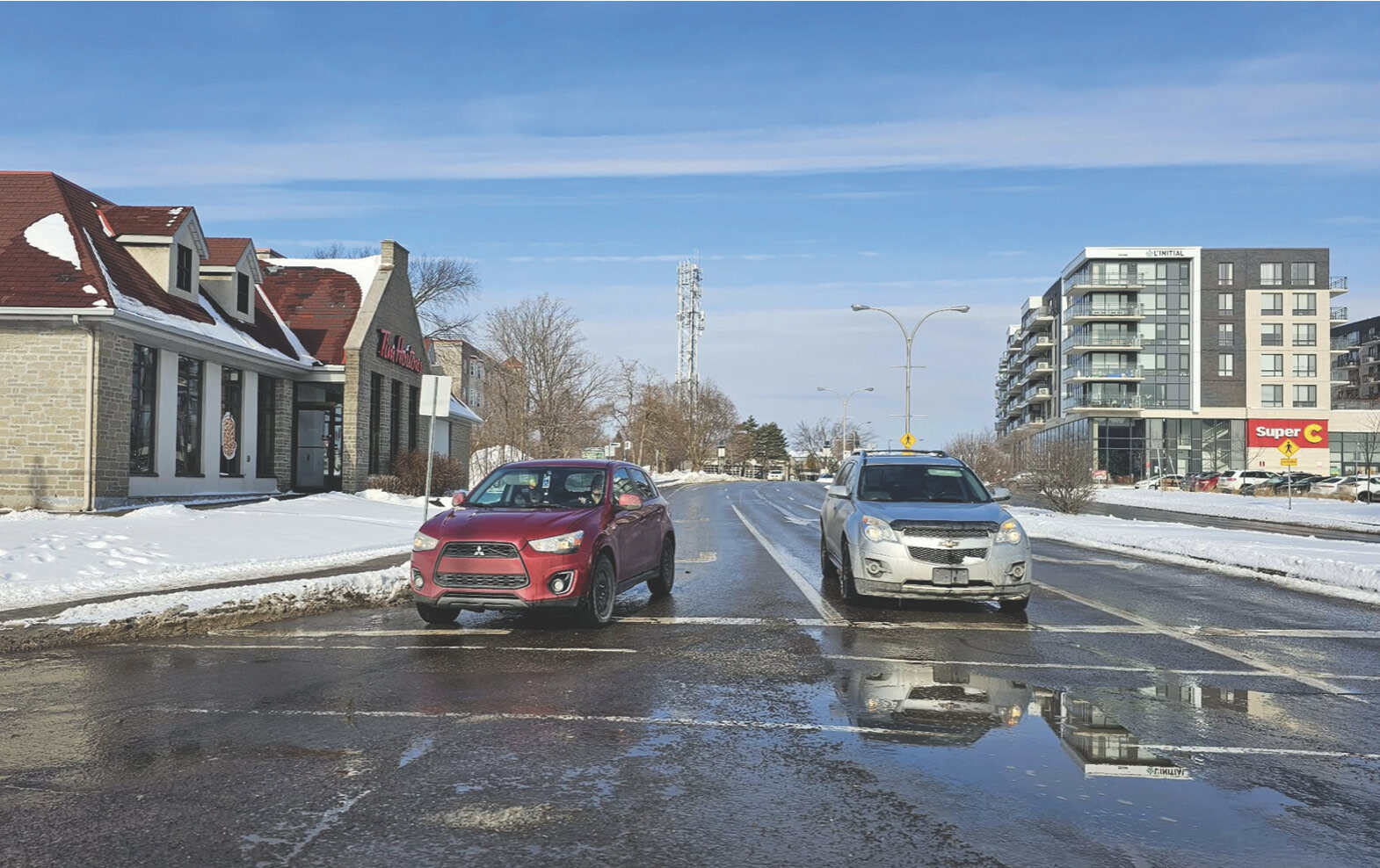
Gatineau is in the second year of a targeted pilot project to reduce road salt use in five neighbourhoods, aiming to protect local waterways while maintaining winter road safety, with early results showing promise but no expansion planned until long-term data is collected. Photo: Tashi Farmilo
Gatineau continues road salt reduction pilot project
Tashi Farmilo
Gatineau is in the second year of a targeted pilot project to reduce road salt use in winter, maintaining its focus on five neighbourhoods while it monitors the environmental effects on local waterways. The initiative comes as the city faces a challenging start to the 2025–2026 snow-clearing season, marked by repeated freeze-thaw cycles, light but persistent snowfall, and episodes of freezing rain that have increased the number of plowing and salting operations compared to previous years.
The eco-winter pilot project, which began in the 2024–2025 winter season, is now in its second year and continues in five neighbourhoods: parts of Aylmer west of Forêt Boucher and Deschênes, the Lac-des-Fées area of Hull, the vicinity of Lac Beauchamp in Gatineau, and a sector of Masson-Angers south of Route 148. These zones are subject to reduced salt spreading as part of an effort to mitigate salt-related environmental damage, particularly the salinization of local waterways, which threatens aquatic ecosystems and drinking water sources.
Matthew Brocklehurst, Communications Manager at Garde-rivière des Outaouais (Ottawa Riverkeeper), emphasized that while the direct impact of road salt on the Ottawa River is limited due to its large volume and dilution capacity, the effect on smaller streams, creeks, and urban ponds is far more significant. These smaller water bodies are highly vulnerable to chloride buildup, which can harm local biodiversity and disrupt aquatic ecosystems. This underscores the importance of targeted action in sensitive areas, especially where runoff enters small tributaries rather than the main river.
In this context, the city’s gradual shift toward using crushed stone as an abrasive, rather than relying solely on chemical de-icers, has been welcomed by environmental groups. According to Brocklehurst, these traction aids enhance road safety while reducing chemical input into surrounding ecosystems, making them a more ecologically responsible option when used appropriately.
Garde-rivière des Outaouais is actively collaborating with the City of Gatineau to monitor the environmental impact of these changes. Water quality is being tested both inside and outside the pilot zones to evaluate whether the salt-reduction strategy is measurably decreasing chloride concentrations. In parallel, community scientists are collecting water samples every two weeks from various sites across Gatineau as part of a broader chloride monitoring initiative.
The organization supports the city’s approach and recommends that similar salt-reduction strategies be adopted by other municipalities along the river. The goal, Brocklehurst noted, is not to eliminate salt entirely but to use it judiciously, applying just enough to ensure road safety while safeguarding the health of aquatic ecosystems. In vulnerable areas and when conditions allow, traction aids like crushed stone offer an effective way to minimize salt use without compromising public safety.
Early findings from the first season of Gatineau’s pilot suggested a decrease in chloride concentrations in participating neighbourhoods compared to standard treatment areas. However, city officials caution that these results are preliminary. Because local streams also collect runoff from adjacent untreated streets, it is difficult to isolate the effects of the pilot areas without several years of data. Gatineau is currently in its second year of winter water sampling, with long-term monitoring planned before any decision is made to expand the program further.
The initiative reflects Gatineau’s broader strategy to find viable, less harmful alternatives to sodium chloride. The city has tested multiple de-icing additives over the years, including beet juice and other organic compounds, but each option presents challenges. Some alternatives perform poorly in subzero temperatures, while others pose risks to aquatic life or come with high implementation costs. City officials stress that any replacement must be proven effective in severe winter conditions and financially sustainable on a municipal scale.
The 2025–2026 season will provide another critical set of data points as Gatineau evaluates the long-term viability of its eco-winter strategy.