


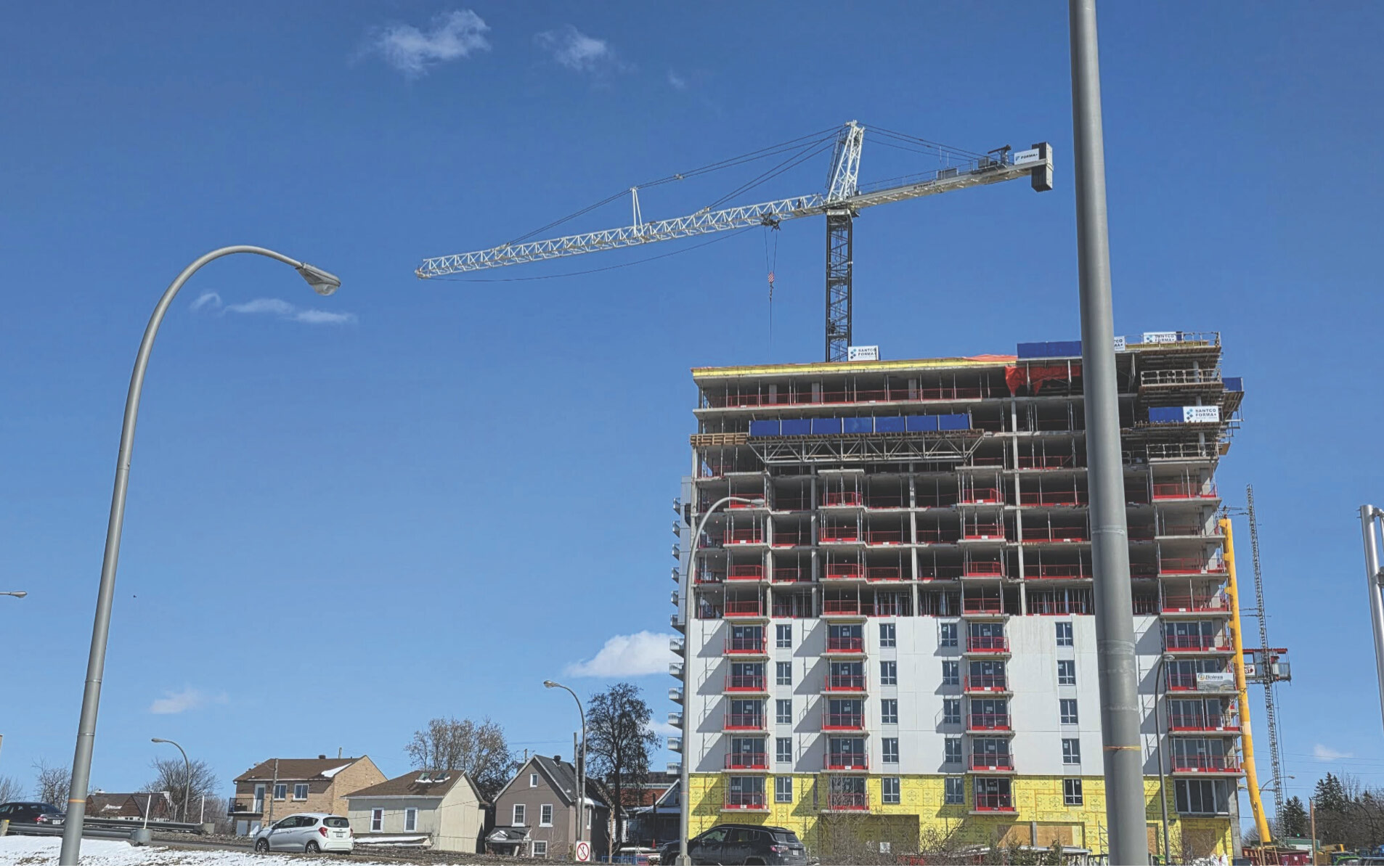
As Gatineau prepares to renew the Climate Plan that expires this year, the watchdog group Action climat Outaouais warns that the city's proposed Climate Test, the tool meant to screen projects for their climate impact, is flawed by design because it would never require calculating a project's greenhouse gas emissions, a gap the group calls especially serious for transportation and buildings, the two sectors behind roughly 70 per cent of the city's emissions. Photo: Tashi Farmilo
Gatineau is building a "climate test” – its watchdog says it won't measure the climate
Tashi Farmilo
The City of Gatineau is designing a tool meant to tell whether its own projects help or harm the climate. By design, that tool will not measure the one factor that most defines a project's climate footprint: the greenhouse gases it sends into the air.
That omission is the sharpest criticism in the fifth annual report from Action climat Outaouais (ACO), the volunteer environmental group that has tracked the city's Climate Plan as an outside observer since it was adopted. It also arrives at a decisive moment. The Climate Plan was built on a five-year horizon in 2021, and it must be renewed during 2026. The city now has to write what comes next, and the screening tool, which it calls a Climate Test, is being shaped at the same time as the plan it is meant to enforce.
The Climate Plan is Gatineau's main framework for confronting climate change. Adopted in October 2021, it committed the municipality to cutting community-wide greenhouse gas emissions by 35 per cent from their 2015 level by 2030, to halving the emissions from its own operations over the same period, and to reaching carbon neutrality by 2050. It laid out 44 actions and more than 200 specific measures, and it has been backed by a $25-million grant from the Quebec government in 2023 along with money budgeted by the city itself. ACO has filed a progress report to city council every year since the plan passed.
The city presented a draft of the Climate Test to a council committee on the environment and climate change in September 2025. ACO's report, which reproduces passages from that presentation, says the city acknowledged it has no tool at present to check whether its projects line up with the Climate Plan, and that adapting projects to a warming climate is not a routine part of how they are designed.
According to that same account, the proposed test would grade a project green, yellow or red instead of giving it a score. The city says the colours are meant to prompt an honest, complete look at a project rather than a scramble to clear a passing mark. The test would also not ask for any calculation of the emissions a project would create. Those studies, the city argues, are slow, complicated and costly, so the tool would look instead at the measures a project includes to cut or soften its impact.
ACO gives the city some credit. It welcomes the fact that a climate test is finally being built, and it notes that the administration has been candid about how little it can currently measure. Its conclusion is nonetheless blunt: the design, as it stands, does not work. Leaving emissions uncounted is, the group says, a serious mistake, above all for projects involving transportation and buildings, where it argues the numbers should always be run, with more scrutiny going to the projects likely to emit the most.
ACO is no more persuaded by the colour scale, which it calls a communication device rather than a real measurement. Judging a project's effect, it argues, means measuring it. And it points out that the test, for now, would only be tried out inside city hall, a narrow reach for a tool meant to steer climate decisions in a city where, by the group's account, roughly 95 per cent of emissions come from the community at large rather than from the municipality's own operations.
What gives the dispute its edge is arithmetic. ACO says transportation and buildings together account for about 70 per cent of the greenhouse gases on Gatineau's territory, and that more than four years into the Climate Plan, the city still has no significant measures aimed at cutting them. The city set a goal of a 35 per cent cut by 2030, but ACO's analysis of the available inventories found that emissions rose between 2015 and 2021, and no newer figures have been published since.
With the renewal due this year, ACO wants the city's auditor general to examine how the first phase was carried out before the next plan is written. Until that happens, the main instrument meant to keep Gatineau's projects honest on climate is being built without the one figure that would show whether they are.