


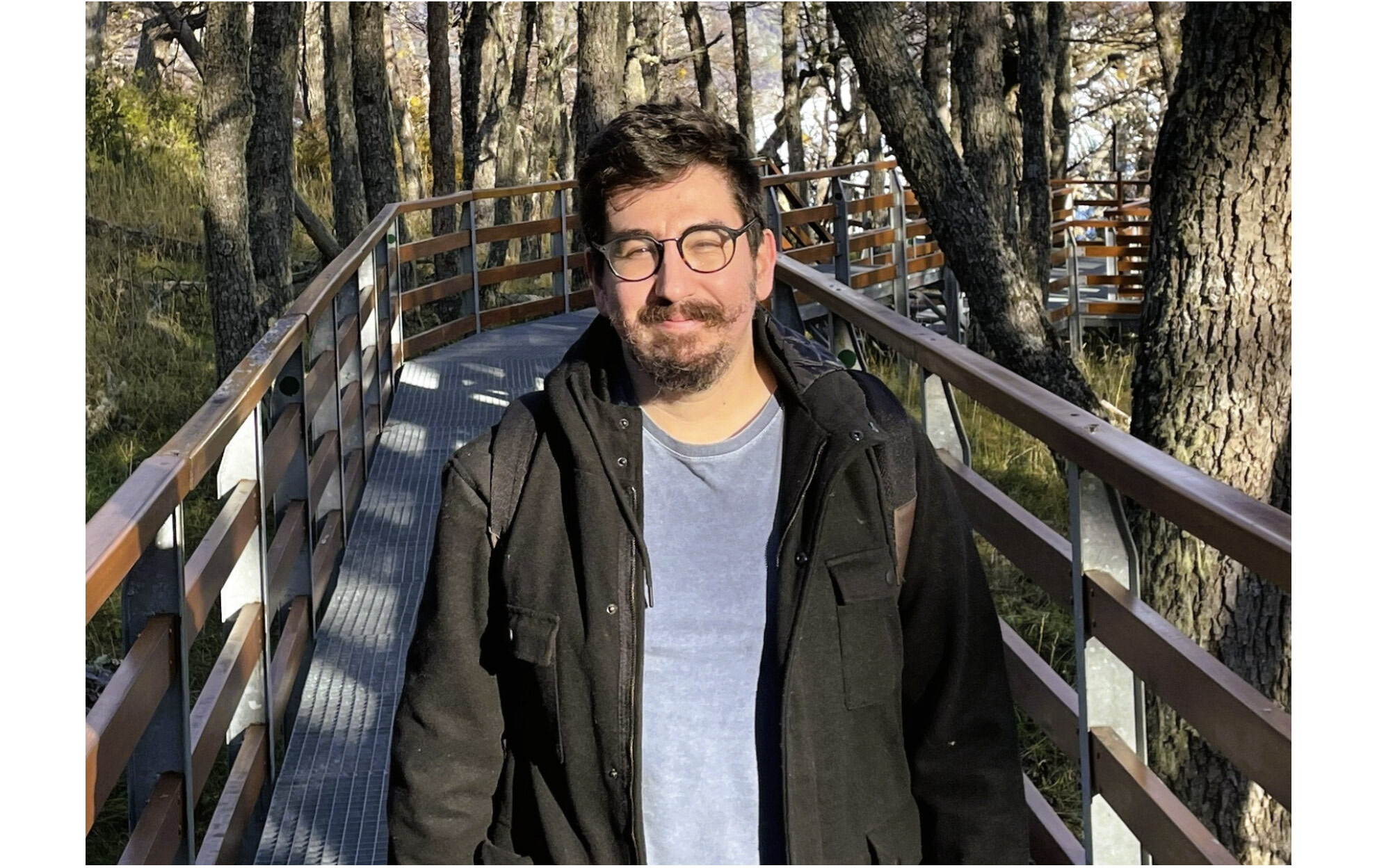
A UQAT doctoral researcher has received a $15,000 Maple Leaf Centre for Food Security scholarship to study how Indigenous families in Maniwaki and Gatineau are working, in partnership with the Maniwaki Native Friendship Centre, to preserve traditional food practices and push for policy change as urban life reshapes their communities. Photo: Courtesy
Gatineau researcher receives $15,000 scholarship to study urban Indigenous food security
Tashi Farmilo
A doctoral student affiliated with the Université du Québec en Abitibi-Témiscamingue has received a $15,000 scholarship to study how Indigenous families in Maniwaki and Gatineau are working to preserve traditional food practices as their neighbourhoods change around them.
Diego Bitencourt Manas, a researcher with UQAT's École d'études autochtones, was named one of four recipients of the Maple Leaf Centre for Food Security's 2026/27 Food Insecurity Bursaries on July 9. The award, funded by Maple Leaf Foods and named in honour of four former chairs of the company's board, goes each year to graduate students whose research addresses gaps in the understanding of food insecurity across Canada. Bitencourt Manas is one of four doctoral recipients, alongside students from Simon Fraser University, Dalhousie University and Queen's University, out of a group of 25 researchers supported by the program since it began in 2020.
His project focuses on the two Outaouais communities because so little research exists on how Indigenous people experience food insecurity while living in urban settings. He noted that most existing data concentrates on remote northern communities, even though a majority of Quebec's First Nations members now live in urban areas. Maniwaki and Gatineau, in his view, offer a rare chance to see whether being close to the Kitigan Zibi and Lac Rapide reserves shapes people's access to traditional foods.
Central to the project is a partnership with the Maniwaki Native Friendship Centre, which operates a service point in Gatineau under executive director Charlotte Commonda. Bitencourt Manas described the Friendship Centre as a frontline organization that has spent decades filling gaps left by provincial and federal services and said its role in supporting food sovereignty has been largely overlooked in academic literature.
Bitencourt Manas is examining what he calls a long-term nutritional transition, in which traditional foods from hunting, fishing, trapping and gathering, along with informal exchanges between the city and reserve communities, are gradually crowded out by pressures from jobs and school schedules and replaced with supermarket and convenience store products. He pointed to the concept of "food mirages," places where grocery stores exist but cost and a lack of culturally relevant options still leave people with food insecurity.
He said food insecurity looks different in Indigenous communities than the picture most Canadians might have. Rather than being only a matter of income or food supply, he linked it to the lasting effects of the Indian Act and residential schools, and described food, for many Indigenous people, as tied to self-determination and healing rather than simply the cost of groceries.
The research is still in an early stage. Bitencourt Manas said he and his partners are finalizing a cooperation and research agreement with the Friendship Centre, a step he called essential to making sure the project follows proper ethical protocols for research involving Indigenous communities. He expects data co-construction to begin in early 2027, with initial results expected the following fall, and said any findings will be shared only after being reviewed with the communities involved, in keeping with principles of Indigenous data sovereignty.
Longer term, he hopes the work will produce practical tools, including a map of urban food resources for the Friendship Centre, along with a policy brief for Quebec's Ministry of Agriculture, Fisheries and Food and federal agencies aimed at shifting food assistance programs away from a charity model and toward one built on Indigenous rights and self-determination.
Bitencourt Manas, who is of Indigenous descent from Brazil and has spent a decade working on similar issues in Brazil and Peru, said the scholarship will help fund fieldwork in the community and support the eventual translation of the research into practical use. His work is also backed by the Social Sciences and Humanities Research Council, the DIALOG Indigenous Peoples Research and Knowledge Network, UQAT and the National Institute of Scientific Research.