


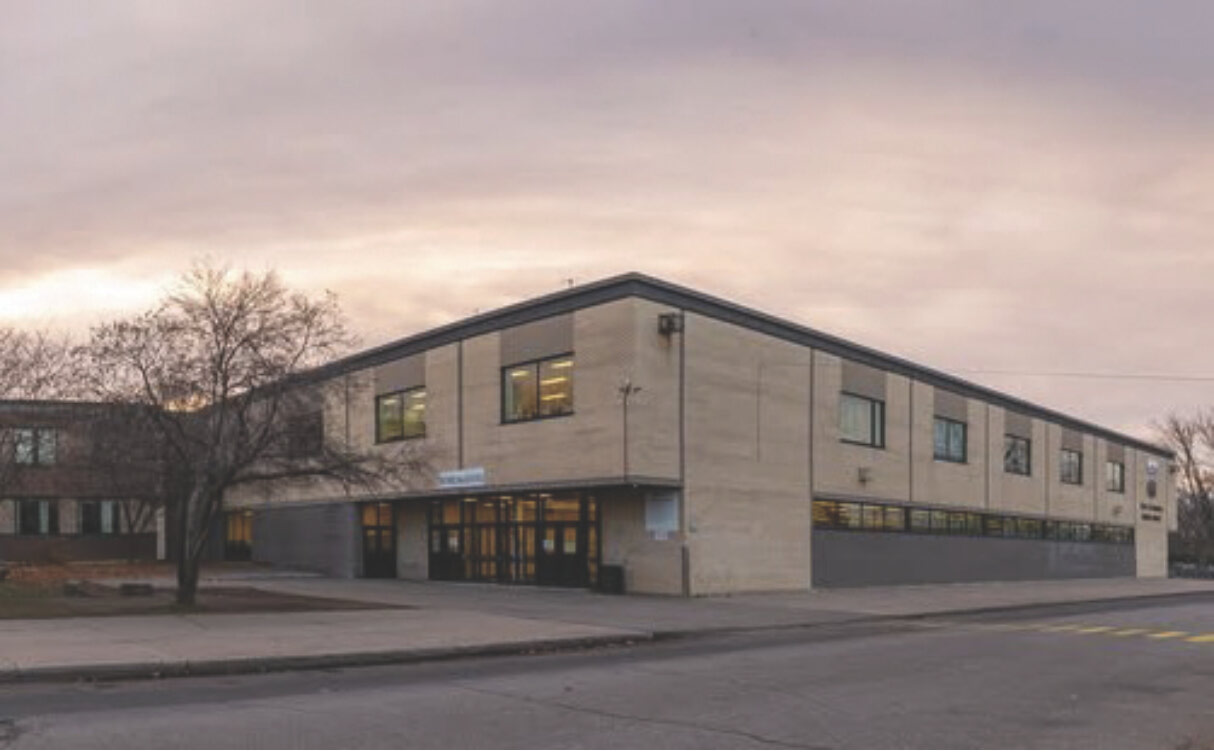
A summer-long Legionnaires' disease outbreak that infected 17 people in Gatineau's Aylmer sector has been declared over after Santé Québec Outaouais traced it to a contaminated water-cooling tower at École secondaire Grande-Rivière, with several hospitalizations but no deaths. Photo: Courtesy of École secondaire Grande-Rivière Facebook page
Legionnaires' outbreak in Aylmer declared over, source traced to high school cooling tower
Tashi Farmilo
A Legionnaires' disease outbreak that infected 17 people in Aylmer over the summer has been declared over, with the region's public health authority saying September 1 that it had at last tied the source to a contaminated water-cooling tower at a neighbourhood high school.
Santé Québec Outaouais said the tower, at École secondaire Grande-Rivière, had been purged of the bacteria and now sits within provincial limits. A round of testing after the cleaning confirmed the water was safe, ending an investigation that had dragged on for weeks.
The health authority sounded the alarm July 15 over an unusual concentration of infections among people who lived in or had passed through Aylmer. The tally climbed from 15 on July 23 to 17 by early August, then held steady as fresh cases stopped surfacing. Even 17 far outstrips the six to eight infections the Outaouais normally logs in a full year. A handful of those patients were admitted to hospital, and none died, the agency said.
Pinning down the origin took most of the season. The Laboratoire de santé publique du Québec sampled and disinfected a series of cooling towers around the sector without landing on a single culprit, and investigators warned that legionella can seed itself in several systems at once. Only as the wave of illness receded did the evidence settle on the tower at the school.
Legionnaires' disease is a severe pneumonia contracted by breathing in a mist of water carrying legionella bacteria. It spreads no further, one patient cannot pass it to another, and swallowing tainted water poses no danger. The organism thrives inside engineered water systems: the cooling towers that sit atop large buildings, but also home water heaters, hot tubs and humidifiers.
Residents were reminded of the same household measures circulated when the cluster first appeared. Officials advised holding the hot water tank at 60 C, fitting scald-guards to bathroom taps, and letting taps run for a few minutes after a home has sat empty or a tank has gone unused. Fixtures that give off a spray, among them showerheads, whirlpool baths, spas and humidifiers, should be cleaned, descaled and disinfected on whatever schedule their manufacturer sets out. Residents with health questions can reach Info-Santé at 811, and Quebec's government website carries more detail on the illness.