


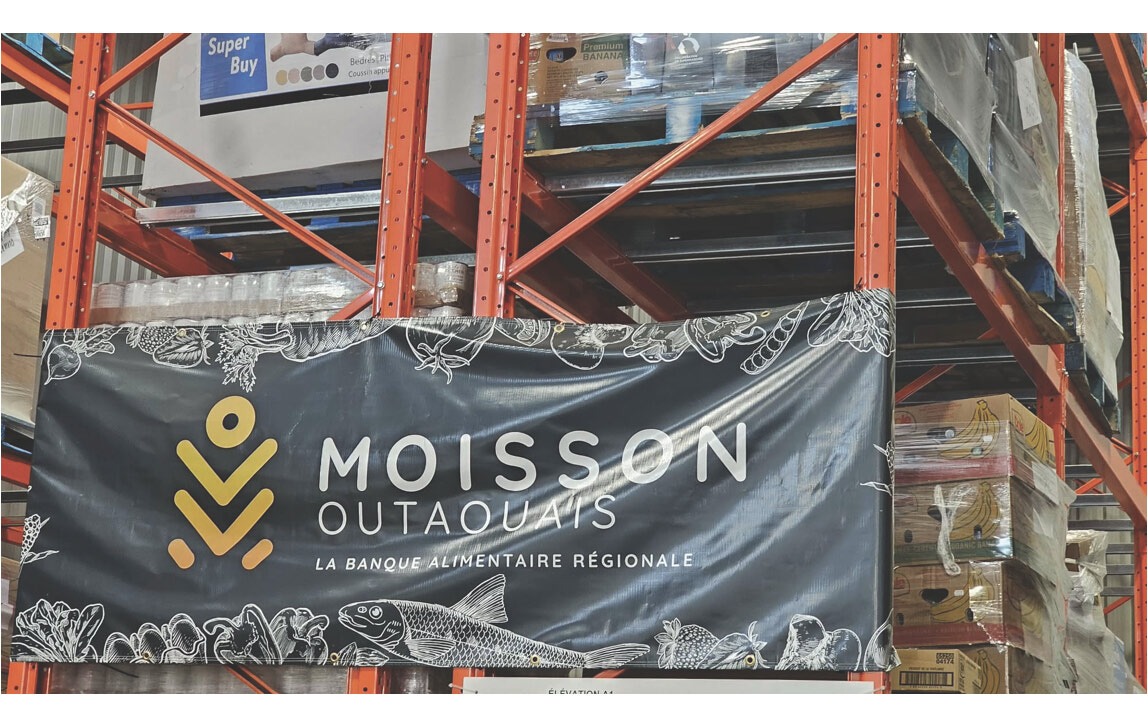
Moisson Outaouais has doubled its student meal production and grown its school program from six schools to ten across the Outaouais, using federal School Food Infrastructure Fund money to upgrade its Gatineau kitchen and reach hundreds more children facing food insecurity. Photo: Tashi Farmilo
Moisson Outaouais doubles the meals it cooks for hungry students
Tashi Farmilo
Moisson Outaouais has doubled the number of meals it prepares for students and widened its school program from six schools to ten across the Outaouais, a push against child hunger paid for by Food Banks Canada through the federal School Food Infrastructure Fund. The Gatineau food bank built a dedicated kitchen in 2019 to prepare and distribute meals, and the recent upgrades now let it feed hundreds more children a day, with a further 500 students expected to join when classes resume in September 2026.
The engine of that growth is a kitchen that works faster than it used to. Moisson Outaouais now turns out roughly 700 meals a day, and the federal money allowed it to enlarge the space, replace equipment and add an electric delivery vehicle. Those changes trimmed daily preparation from four hours to two and a half, cut the margin for error and smoothed distribution, freeing the kitchen to make more than 500 additional meals a day and reach 300 more students. For David Grégoire, the food bank's operations director, coordination remains the hardest part of running an operation this size.
Much of what happens after the cooking is designed to spare a child any awkwardness. A parent chooses a meal through an online platform, the food arrives at the school, and every child eats together whether or not that meal was paid for. That visibility is part of what drives him. "From the food bank's perspective, a lot of food is redistributed, but we don't know where it all goes. In schools, the food goes directly to the kids, and we know it. That motivates us to look at the actual impact and measure it," Grégoire said. Families have shaped the service too. Regular surveys pushed the menu from three options to five, with more fresh local produce, and parents can now order as late as 7 am the same morning.
The food itself leans on farms within driving distance. Moisson Outaouais buys summer fruits and vegetables from two area producers, Ferme Chapeau Melon and Ferme aux Pleines Saveurs, and freezes the surplus so ingredients grown in the region stay on the plate through the winter. With help from Équiterre and the Institut de tourisme et d'hôtellerie du Québec, which also redesigned the kitchen for efficiency, the menu is built to be at least half local. Nutritionists from La cantine pour tous, the organization that distributes the meals in schools, sign off on every dish.
Moisson Outaouais does not intend to stop at ten schools. It plans to double the size of the kitchen, lifting its ceiling to 2,200 meals a day, bring more schools into the fold and add regional farm partners. For Grégoire, the case for pressing on is simple. "Taking action always involves risks, but it would be even riskier to do nothing," he said. "We are 100% confident that action is needed in schools."