


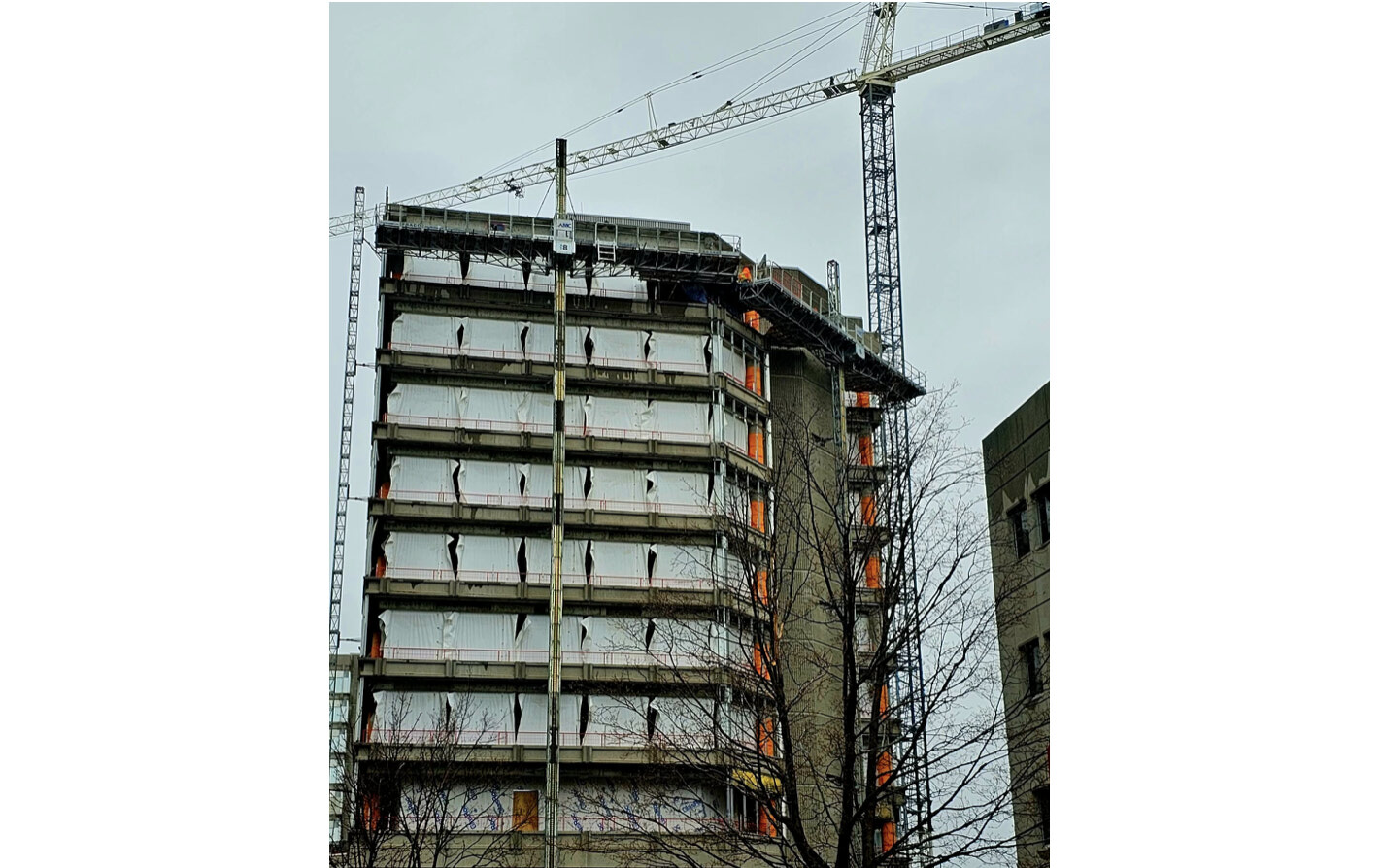
Gatineau is facing rising infrastructure costs driven by regulatory demands, labour pressures, and inflation, prompting a strategic shift in how the city manages its capital projects and long-term budget planning. Photo: Tashi Farmilo
Paying the price for progress
Tashi Farmilo
A comprehensive report published by the Union des municipalités du Québec (UMQ) in December 2025 continues to resonate across Quebec as municipalities grapple with the rising cost of building and maintaining infrastructure. Gatineau has become a case study in how regulatory, economic, and structural factors are converging to challenge local governments' financial planning.
Commissioned by the UMQ and conducted by consulting firm Raymond Chabot Grant Thornton, the study quantifies how infrastructure construction costs have changed over the last decade. Between 2015 and 2025, the cost of building one kilometre of aqueduct infrastructure increased by 88 percent, with 40 percent of that increase directly attributed to evolving government regulations. These include environmental compliance standards, complex permitting, and lengthier project timelines.
Across the province, these regulatory burdens are costing municipalities between 900 million and 1.5 billion dollars per year, representing 28 to 40 percent of the total cost increases in infrastructure projects over the same period. Productivity in the construction sector declined by 2.7 percent, even as overall productivity in the economy rose by 6.1 percent, while wages in the construction industry are expected to rise 24 percent between 2025 and 2028, according to new collective agreements.
In the Gatineau 2026 municipal budget, released in January, the city forecasts a balanced operating budget of 925.6 million dollars, but continues to face a recurring structural deficit projected at 52.7 million dollars between 2027 and 2030. Capital investment pressures are also mounting. The city has committed to a 324 million dollar investment program for 2026, focused heavily on roadwork, water infrastructure, public transit, and municipal services.
One of Gatineau’s key infrastructure priorities is the planned expansion of Chemin Pink and Boulevard La Vérendrye, supported by roughly 70 million dollars in federal and provincial funding. Although these projects have been announced, construction schedules have not yet been confirmed. In the city’s west end, 18.6 million dollars has been set aside for the construction of a new ecocentre. This facility, expected to break ground in late 2026 or early 2027, is intended to meet increasing demand for waste disposal, recycling, and hazardous materials management, expanding access to services already offered at other locations in the city.
The city is also navigating mounting pressure from aging infrastructure and population growth, particularly in fast-developing districts such as the Plateau and Aylmer. These pressures are compounded by broader fiscal realities, including limited flexibility to raise property taxes without risking affordability. The planned tax increase for 2026 is 3 percent for residential and 4 percent for non-residential properties, a modest adjustment when compared to the underlying cost escalations facing the city.
Gatineau’s administration has responded by overhauling its infrastructure management approach. Rather than assigning fixed amounts to individual capital projects, the city is pooling funds and adopting a more dynamic portfolio method, enabling it to prioritize shovel-ready work and reallocate funds as needed. This approach is designed to counter the cost impacts of project delays, which the UMQ report estimates can raise the total cost of a project by 5 percent for each year of postponement.
Beyond Gatineau, municipal officials across Quebec are echoing calls for regulatory reform and new fiscal tools. “This study confirms what municipalities are seeing on the ground: construction costs are exploding, and a significant portion of that increase stems from regulatory requirements. It is imperative to review and simplify these standards so municipalities can carry out their projects at costs that are sustainable for taxpayers,” said Guillaume Tremblay, president of the UMQ and mayor of Mascouche. “We are issuing a clear call to the Government of Quebec: let’s work together with the construction sector to find concrete solutions. The sustainability of our infrastructure and the quality of essential services for our population are at stake.”
A request for comment was sent to Gatineau Mayor Maude Marquis‑Bissonnette, who was recently elected president of the UMQ’s Major Cities Caucus, but no response was received by press time.