


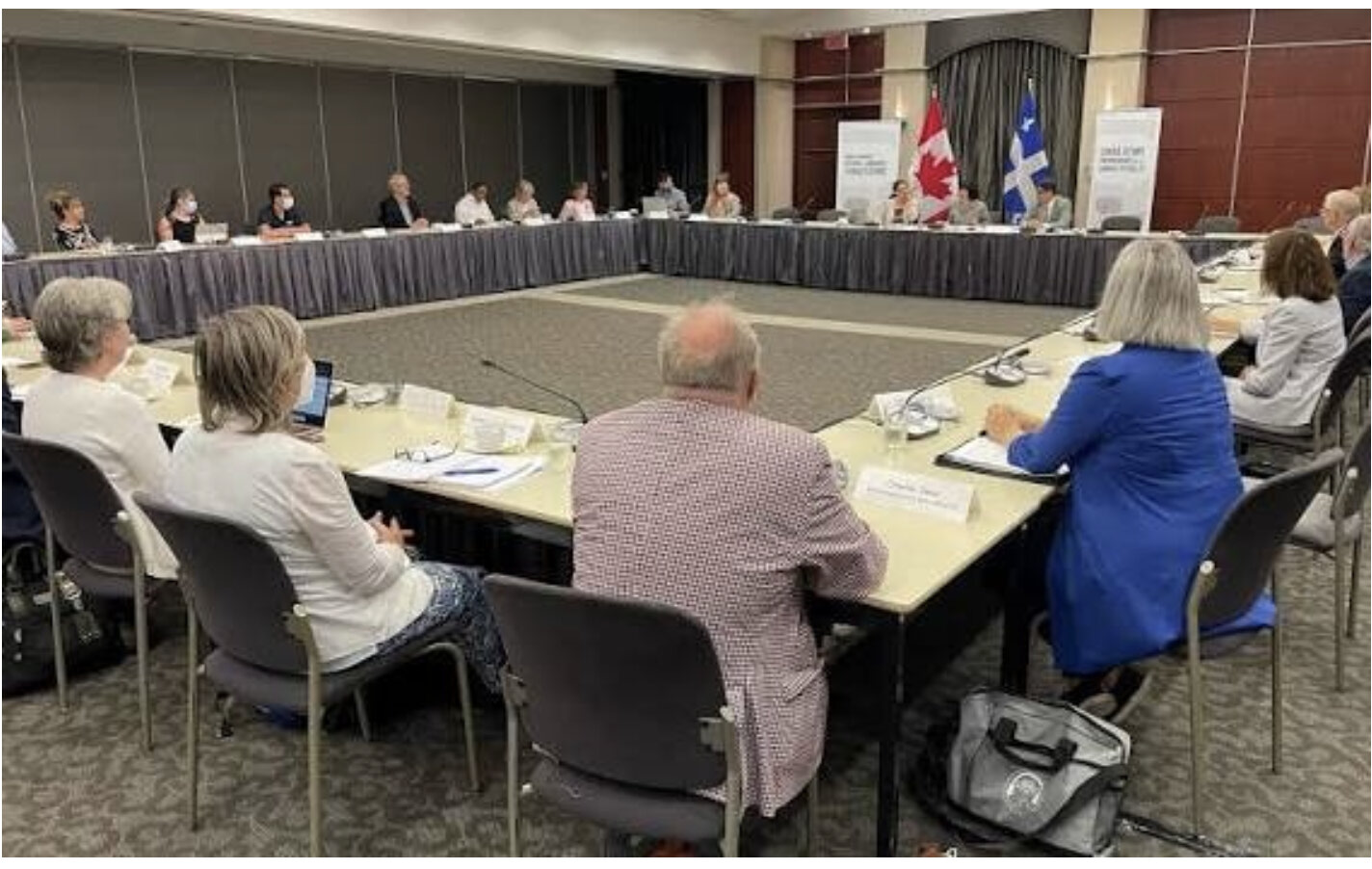
The Department of Canadian Heritage has opened a cross-Canada online questionnaire, running until November, that invites the public to help set the priorities for the federal government's next official languages strategy, the successor to the $4.1-billion Action Plan for Official Languages 2023–2028. Photo: Courtesy of Canadian Heritage
Public gets a direct say in Canada's next official languages strategy
Tashi Farmilo
The Department of Canadian Heritage has opened a cross-Canada online questionnaire, launched June 22, that gives the public a direct say in what comes next for English and French in Canada. The responses will help shape the federal government's next official languages strategy and, with it, the priorities that will guide federal spending and programs for years to come.
The stakes are concrete. The plan the new strategy will replace committed more than $4.1 billion over five years, the largest official languages investment in the country's history, spread across 32 initiatives touching Francophone immigration, education from early childhood to post-secondary, community organizations, health, justice and federal accountability. Decisions about what a renewed strategy funds, expands or drops will land on schools, community groups, newcomers and minority-language services in every province and territory. The consultation is where the case for those choices gets made.
Public input has moved the needle before. The 2022 Cross-Canada Official Languages Consultations, which fed directly into the current plan, drew more than 6,500 participants through in-person events, an online questionnaire and virtual sessions. What those participants raised, labour shortages, wage pressures, the strain on small community organizations and the reliance of minority communities on immigration, shaped the plan that followed, including its boost to core funding for community groups and its stronger measures on Francophone immigration. This round offers the same opening to anyone who takes part.
The Honourable Marc Miller, Minister of Canadian Identity and Culture and Minister responsible for Official Languages, was mandated to develop the new strategy and launched the consultations. The government has said the views collected will help define a strategy meant to advance the substantive equality of English and French, support official language minority communities, and protect and promote both languages, particularly French, across the country.
The questionnaire is one channel among several. A cross-Canada tour of invitation-only in-person sessions for community partners and stakeholders will run in all provinces and territories through November, alongside thematic, sectoral and virtual sessions. Consultations with provincial and territorial governments, whose jurisdiction covers education, are set to finish sooner, in September. The survey itself asks a few background questions, on languages spoken, gender, province or territory, and age, to help the department read regional differences and match programs to them. For the purposes of the consultation, official language minority communities are defined as the English-speaking communities of Quebec and the Francophone communities outside Quebec.
The demographic picture behind the exercise, which the current plan laid out plainly, gives it its urgency. The plan reported that the share of Francophones outside Quebec fell from 6.1 per cent of the population in 1971 to 3.5 per cent in 2021, and that the share of the total population whose first official language spoken is French dropped from 27.5 per cent to 22.0 per cent over the same period. At the same time, it noted that the number of people whose first official language spoken is French reached 7.8 million in 2021, a record in absolute terms, and that Canada's bilingualism rate has held near 18 per cent for decades, reaching 18.0 per cent in 2021. Growth in French, in other words, has not kept pace with the population as a whole, and the next strategy is where the response gets decided.
The questionnaire takes about 10 to 15 minutes and is open to everyone. Those who want to say more can send a brief, a document or an email setting out their perspectives to the department at Consultations_LO-OL_Consultations@pch.gc.ca. Participation is voluntary and responses are confidential, and Canadian Heritage has said the information gathered will be handled in accordance with the Privacy Act. Session dates and locations are to be posted on the department's consultation webpage as they become available.
The questionnaire can be completed at: https://pch.survey-sondage.ca/f/s.aspx?s=A75AF21F-7014-46DA-80F5-C8B63E12C388&lang=EN&r=90713661-4179-4f38-a07e-dd1b3390350e