


A walk down memory lane
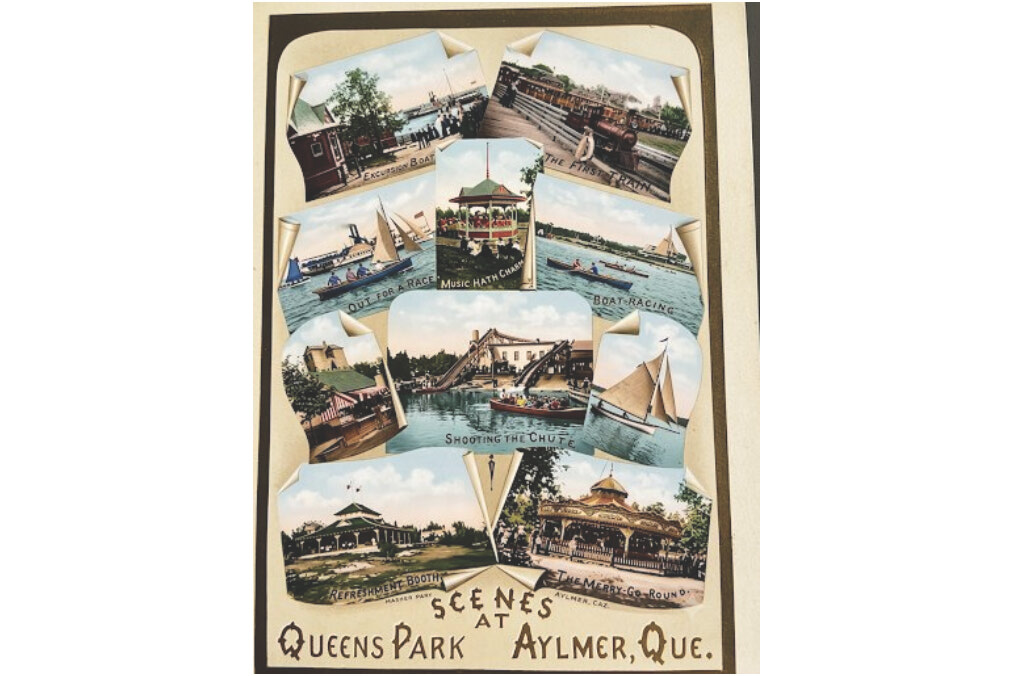
Queen's Amusement Park
Charlie Trinque
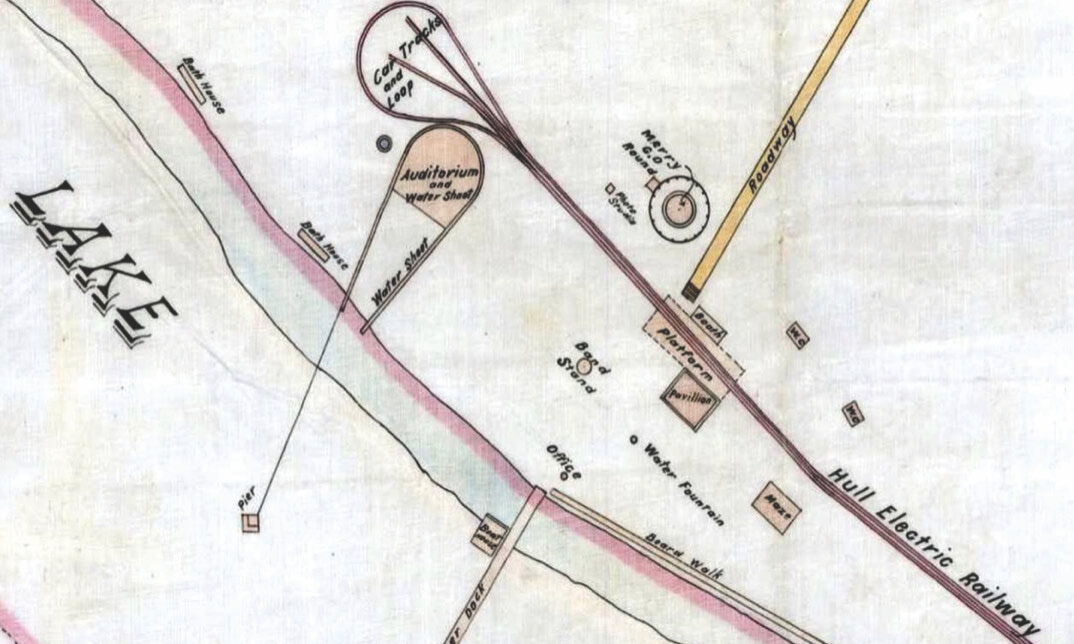
Queen’s Park was situated in Aylmer on the Ottawa River, three miles upstream from Main Street. It opened in 1896 on approximately 80 acres of land owned by the Hull Electric Railway Company.
The Railway Company built the park as a destination at the end of its streetcar line, encouraging people from Ottawa and Hull to ride to Aylmer. The trip to the lakeside entertainment complex on Lake Deschênes took about half an hour.
Attractions included:
- A wooden carousel
- A mirror maze and funhouse attractions
- The famous "Shoot-the-chute" water ride
- A roller-skating pavilion
- A bandstand for concerts
- A five-cent cinema
- Picnic grounds among cedar and pine trees
- Laughing Gallery
- Excursion cruises aboard the steamboat G. B. Greene
- The elaborate Mistic Moorish Maze, a labyrinth with 124 doors
- A boardwalk along the river
- Facilities associated with the historic Victoria Yacht Club (destroyed by fire in 1921)
- Boat rentals
- Swimming
- Bath house
- Refreshment pavilion
- Ball Field
- Black Bears in a Cage
The park became enormously popular. Historical records indicate that the railway carried hundreds of thousands of passengers during the summer seasons, with attendance sometimes reaching 12,000 visitors in a single day.
Here's what you might have experienced on a pleasant summer day:
Local residents could stroll along tree-lined paths, while gardeners maintained flowerbeds and trimmed hedges, with gentle breezes blowing through the cedars and pines.
The train would arrive carrying families, some with picnic baskets and looking for a shady spot to lay down their blankets. Other visitors would arrive from Ottawa by ferry.
Well-dressed couples might be taking leisurely walks along the boardwalk. Victorian etiquette was important. Men generally wore suits, hats, and polished shoes even in warm weather. Women typically wore long dresses, gloves, and elaborate hats. Parasols were also very popular.
For those who didn't bring food, cold roast chicken or ham or cheese sandwiches were served at the Refreshment Pavilion, along with fresh salads, seasonal fruit, lemonade, tea and soft drinks.
Queen's Park had a bandstand that would host evening concerts featuring marches, waltzes or popular pieces by renowned composers of the day.
Baseball was very popular with the youth, who played Old Cat games, basically baseball played with one, two or three bases, depending on how many players were participating. Later in the afternoon, as the day cooled, families might play a game of croquet or take another stroll along the boardwalk before boarding the Hull Electric Train back to the city. Electric lighting was still limited so most visitors would leave before dark.
The park's fortunes were closely tied to the streetcar system. As automobile travel became more common and economic conditions worsened, attendance declined. During the late 1920s and early 1930s, amid the onset of the Great Depression, the Hull Electric Railway ended its Ottawa–Aylmer tram service to Queen’s Park and the park closed around 1930.
Most of the park's buildings were demolished and the land subdivided and sold for cottages and houses. The area gradually evolved into the residential Queen’s Park neighbourhood we know today.
Very little of the amusement park remains; however, one notable survivor is the original 1896 Ticket Booth, which stood near the steamboat dock. It was preserved by residents and later acquired by the Symmes Inn Museum for restoration and public display.
In the late 19th century, amusement parks were built by railway companies at the end of their transit lines to increase ridership. For several decades, Queen’s Park served as the premier recreational destination for residents of Ottawa, Hull, and Aylmer.
Sources: Aylmer Heritage Association, Lost Ottawa, and The Last Remnants of Queen's Park (Jean Deschenes)
For more local history, join "A Walk Down Memory Lane Aylmer" on Facebook.