


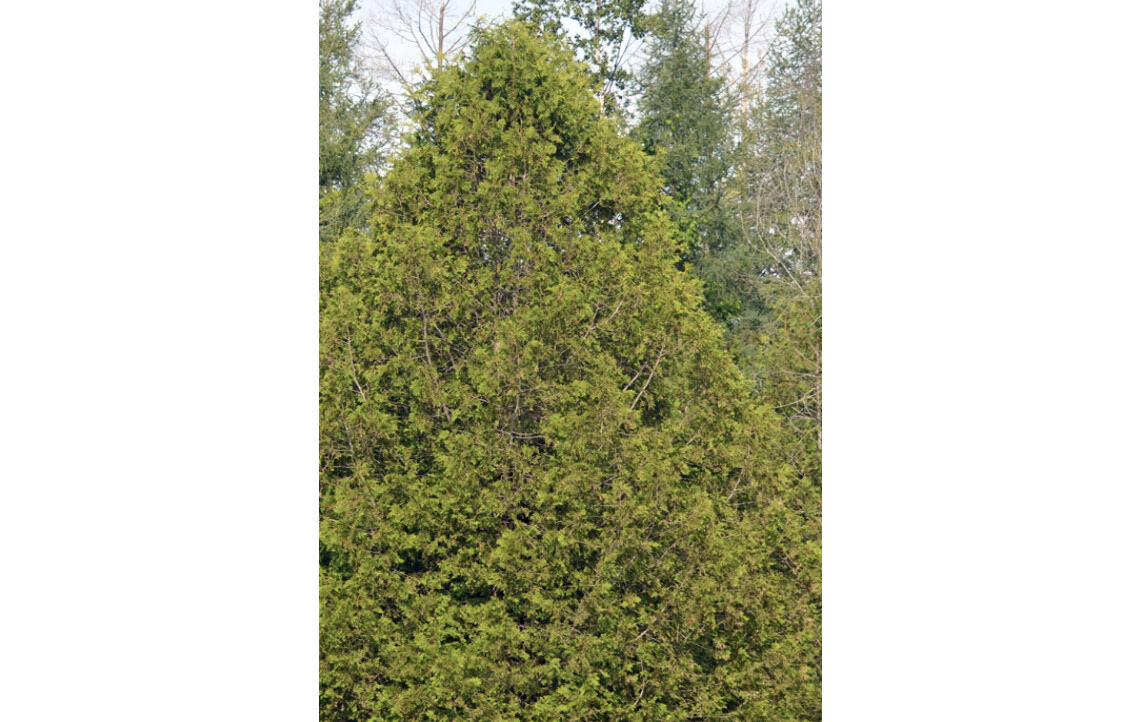
The western red cedar
The western red cedar (commonly known as Canadian cedar) found in the Deschênes forest is one of the country's native conifers. And yes, it is the same species that is planted and pruned to form hedges and screens in urban landscapes.
Impressive when growing in the wild, it can reach 15 meters in height and live for several hundred years. While most trees shed their leaves once fall is well underway, the thuja tree retains its greenery all year round.
It is a coniferous tree with reddish-brown bark that is furrowed with long, thin strips. Its foliage consists of flat, flexible, and resistant branches. Its slender, ovoid cones are yellowish-green in color and turn brown when ripe.
They are commonly known as “cocoons.”
The tree provides an important refuge for many birds and small animals and is a particularly popular food source for white-tailed deer.
In addition to these characteristics, its branches are often used in Christmas decorations, giving off a very aromatic scent that fills the house and reminds us of the smell of the forest.
(Trans. : BA)