


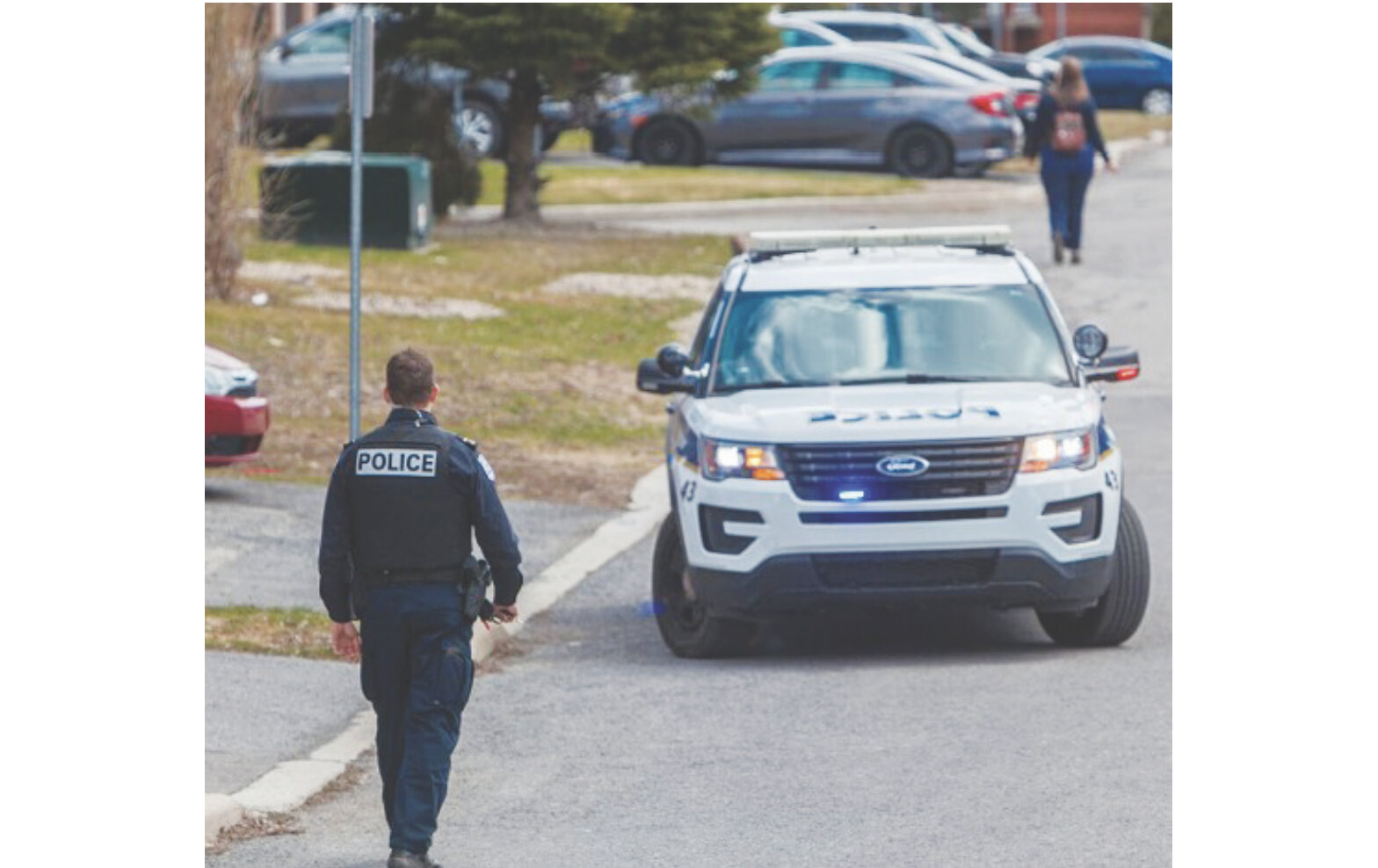
A coalition of Quebec women's organizations is challenging the province's recent survey on intimate partner violence, arguing that it misrepresents coercive abuse and risks misleading policy. They also express concern that the data downplay gendered dynamics and may distort public understanding of who calls police and why. Photo: Courtesy of the Institut de la statistique du Québec
Women’s groups challenge Quebec's violence survey
Tashi Farmilo
A coalition of Quebec women’s shelters, advocacy groups, and academic researchers is condemning the province’s first population-based survey on intimate partner violence, warning that its methodology risks misrepresenting the nature of abuse and undermining support for victims.
The Enquête québécoise sur la violence commise par des partenaires intimes, conducted by the Institut de la statistique du Québec (ISQ) in 2021 and 2022 and released in December 2025, aimed to produce a comprehensive portrait of violence within intimate relationships. But major organizations including the Fédération des maisons d’hébergement pour femmes (FMHF), Regroupement des maisons pour femmes victimes de violence conjugale (RMFVVC), L’Alliance des maisons d’hébergement de 2e étape, L’R des centres de femmes du Québec, and SAS-Femmes argue the survey fails to capture the reality of coercive, gendered abuse.
In a joint statement, the groups criticized the survey for collapsing distinct forms of violence such as situational conflict, mutual aggression, self-defence, and sustained coercive control into a single category. A respondent is classified as a victim if they report two acts of physical violence over their lifetime, without regard for context, frequency, or intent. This, they contend, erases the dynamics of domination that define most cases of domestic violence and creates a misleading sense of equivalence between different experiences.
The ISQ acknowledged that its data cannot determine whether the violence described by respondents meets Quebec’s policy definition, which since 1995 has described domestic violence as a deliberate strategy of control. The coalition argues that the survey’s failure to address coercive control as a pattern rather than isolated incidents renders invisible the psychological, economic, and emotional entrapment many victims face.
According to the survey, 40 percent of women and 26 percent of men in Quebec have experienced at least one act of violence from a partner or ex-partner. In the previous 12 months, 6 percent of women and 4.2 percent of men reported such experiences. Yet only 26 percent of women and 17 percent of men who reported acts considered criminal had ever contacted police. Reporting was more frequent in cases of physical or sexual violence than in those involving psychological or reproductive coercion, despite the serious consequences of the latter.
These findings reflect national trends. In 2019, Statistics Canada found that just 19 percent of Canadians who experienced partner violence involving physical or sexual acts reported it to police. This gap, often referred to as the "dark figure" of crime, remains significant in intimate partner violence, where stigma and fear often prevent victims from disclosing abuse.
The coalition also warns that the survey risks reinforcing a false narrative of gender symmetry in violence. By giving equal statistical weight to an abuser’s actions and a victim’s defensive response, the data may obscure who is exerting control and who is trying to survive. Such misinterpretations, they argue, could weaken gender-specific services and endanger women and children.
Demographic disparities also emerge from the data. Women with lower educational attainment and those living in disadvantaged areas were more likely to report violence to police. Survivors with histories of childhood trauma, including state care or exposure to domestic violence, also reported at higher rates.
The signatories urge the Secrétariat à la condition féminine to require substantial methodological revisions in future surveys. They advocate for tools that can detect patterns of coercion and chronic abuse, and for closer collaboration with practitioners and researchers specialized in gender-based violence.
For these organizations, the issue is not statistical. It is structural. When flawed data inform public policy, the consequences are real. If Quebec is to address intimate partner violence effectively, it must begin by measuring it with accuracy and depth.